




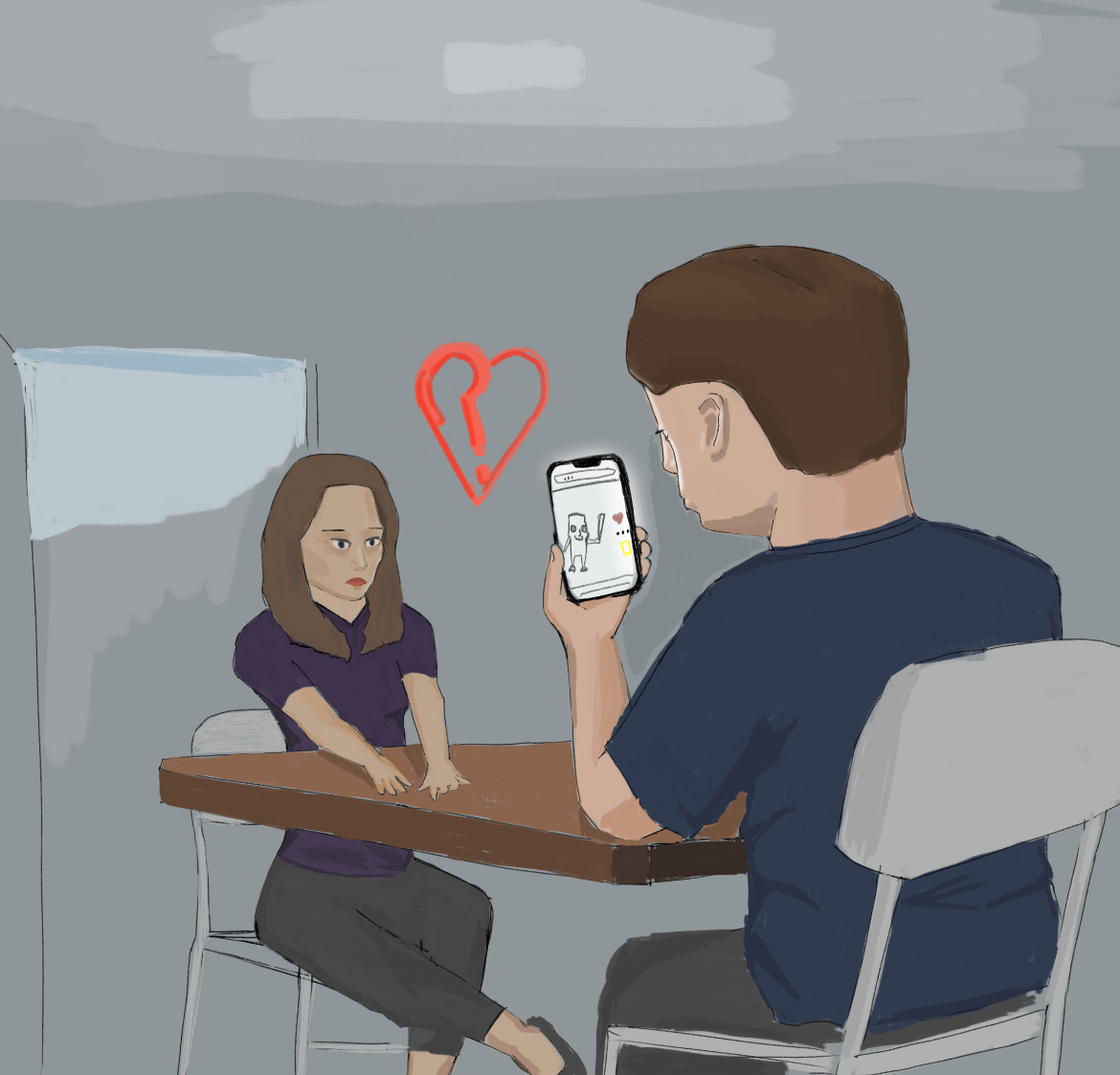
They text you every day. They come over on weeknights. They remember how you take your coffee. And yet, ask them to define the relationship, and suddenly, they have never heard of language.
Welcome to the situationship: part relationship, part mirage, entirely exhausting. The term describes the fuzzy space between friendship and commitment. No labels, no timelines, no obligations. Just vibes and, eventually, a spiral of unanswered questions.
A 2025 survey by the Dating and Relationships Institute found that 61 percent of adults aged 18 to 30 had been in at least one situationship in the past two years, up from 34 percent in 2019. Only 8 percent said it had evolved into a committed relationship.
Grant Hong ‘27 described the experience plainly: “It felt like a relationship in every way except that we never said it was one. Somehow that small absence made everything feel unstable.”
Critics argue that dating apps engineer this ambiguity by design. When the next option is one swipe away, commitment is reduced to opening and closing a browser tab. However, a more generous reading is that this generation is simply more cautious, having watched the cost of rushing in headfirst.
Hong said, “I would rather take my time and mean it than perform a commitment I am not ready for.”
Love, in that reading, is not dead. It is just unevenly distributed, and reclaiming it means tolerating, even briefly, the discomfort of being known before you are certain the knowledge will be safe.