

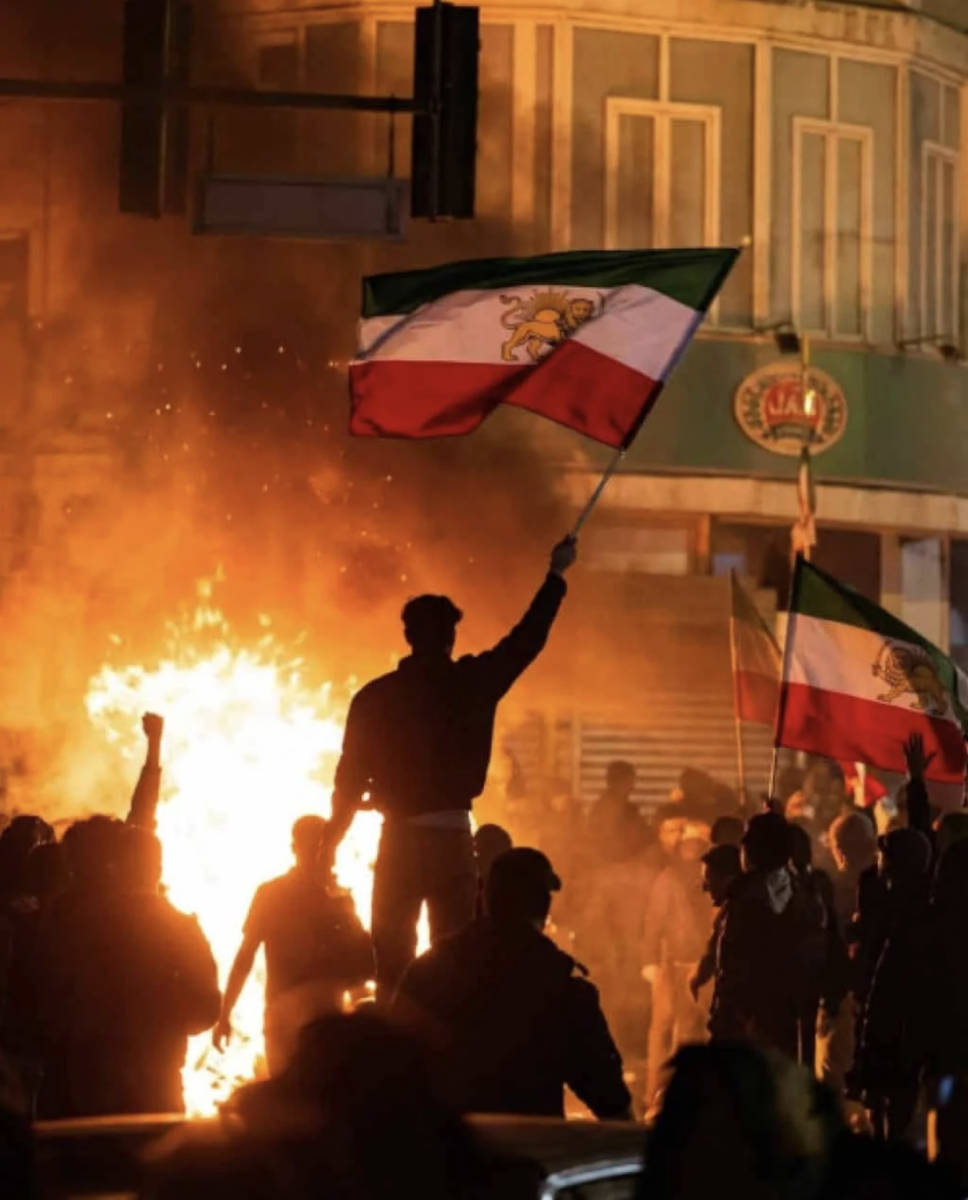
For the past three months, the raging war in Iran has been one of the hottest topics of conversation around the world. At the core of that conversation is a harsh reality: the war in Iran is unnecessary, costly and a promise broken to all Americans. This was supposed to be a mission to prevent the spread of nuclear proliferation, but it escalated to levels that constituted a war with no clear endgame. The decisions that led us to this ongoing war need to be further examined.
On February 28th, what was a peaceful morning in Tehran, Iran, chaos struck. The house of the Ayatollah Khamenei (Supreme Leader of Iran), was blown up by the Israeli Defense Force and the US Military with the use of a variety of bombs. The Leader was killed on the spot as well as many other powerful governmental figures, strategic infrastructure, and military sites. A war had just begun between Iran, Israel and the United States. This war, with many factors, was mainly triggered by the US and Israel not wanting Iran to obtain enriched uranium to develop nuclear weapons. This was evident when both countries bombed numerous uranium sites in Iran in the Summer of 2025, which has now become known as the “Twelve Day War”.
It has become clear that both Trump and Netanyahu’s administrations do not want Iran to have nuclear weapons. Currently, three months and counting into the war with Iran, many essential questions have been asked and debated among the American people. Should we have gotten involved? Should Iran have a nuclear weapon? Should we be fighting on behalf of Israel’s national security? The list goes on, but to determine if the war was necessary overall, we must further examine what the pros and cons are of this historical campaign.
To understand whether this was a justified war or not, we have to understand both sides of the conflict: the good and the bad. On the surface level of this war, there are many positives, including the removal of the Ayatollah Khamenei from office. The Ayatollah was a tyrant who, according to CBS News, ordered the deaths of over 12,000 civilian protesters, suppressed women and gay rights, and abused his power. Regime change was needed. His death sent a powerful message around the world to enemies that having nuclear ambitions against the US will result in punishment.
Additionally, one can argue that the destruction of Iran’s nuclear facility sites could halt any nuclear tension in the Middle East; however, it should be noted that I disagree with that point of view because Israel is just as likely to launch a nuclear weapon as Iran.
Nevertheless, I believe that the cons outweigh the benefits immensely. To name one, the United States has found itself in another conflict with a Middle Eastern country. The US has had a war in Afghanistan, Yemen, Iraq, Syria and now Iran. All of these wars have drained resources, time and resulted in mass casualties.
AP Human Geography and APUSH teacher Christopher Perkins ‘07 further verifies the failure of wars in the Middle East as he claims, “Both the Iraq and Afghanistan war were detrimental and necessitated operations that took many years”.
The US does not need to be in another war in the Middle East. Another con is the closure of the Strait of Hormuz. Over 20% of the world’s oil comes from this strait and a similar percentage is supplied to the US. This ultimately spikes our gas prices, and we have seen them rise $1.53 a gallon nationwide.
Christopher Perkins ‘07 also claims that the closure of this strait impacts all of us, “It’s causing all kinds of economic problems with the closure of the Strait of Hormuz, which financially impacts all Americans.”
To name one more adverse effect, and perhaps the most concerning, is that it creates a new national security threat for the US. Sleeper cells that could be activated in the US, which would create a spark in terrorist attacks. Who is to say another event like 9/11 couldn’t happen again?
When I think of whether a war is necessary, I think of self-defense or the defense of our close allies. Neither was an immediate threat, even though the government can claim that Iran was “weeks away” from a nuclear weapon. One of the biggest headlines is that Israel brought us into the war. We may never know if this is completely accurate, but the only time I believe it would be necessary is if Iran attacked first, which they did not. I get the point that the bombings were to prevent future wars, but if so, why didn’t Israel do it themselves if they were the only ones in an immediate threat?
Aria Emamjomeh ‘27 expresses the same anger as he claims “We have US soldiers dying for a country that doesn’t even have a defense treaty with us and is using our military for their actions”.
The reality is that President Trump ran on a platform of “no new wars”, and this promise was broken. I fully support the action taken to start a regime change in Iran, and I do not believe that Iran should have a nuclear weapon, but I do not think it is in our interest to intervene and take militant action. This is because the war has brought more distrust in the government, more national security threats, billions of dollars towards the effort, higher gas prices due to the closure of the Strait of Hormuz and more issues that could have been prevented.
In conclusion, the war in Iran has had a few successes, but overall has been a complete disaster. The last thing the US needs is another war in the Middle East. I truly believe that this was not an act of defense or a necessary act of offense. We had already bombed their nuclear facilities previously, and continuing a campaign that would go on for ages is not a smart decision and does not help any American whatsoever.
The mere chance that we were dragged into this war also displays poor leadership and a failure of government. While we did attempt a ceasefire on April 7-8, it failed disastrously as Israel broke the ceasefire and the US could not negotiate. The mission has essentially been completed with the removal of the Ayatollah and the destruction of their nuclear facilities, so now we must begin an immediate withdrawal to focus on our own country.