




It’s pitch black except for your speedometer and headlights as you clock in at 100 mph, roaring down a steep Japanese mountain pass in a drift car, when suddenly, a sharp left turn takes you to a Formula Drift circuit, where blaring lights and cheering fans watch as you bridge the gap between retro and modern in your tantalizing interlude.
Racing icon Kunimitsu Takahashi first invented drifting on his motorcycle in the 1970s because he refused to decelerate when turning corners, which gave him a competitive edge and won him numerous championships, subsequently popularizing the technique among racers.
Keiichi Tsuchiya, a 21-year-old street racer enamored by Takahashi’s cornering techniques, began practicing them on mountain passes every night until he perfected his drifting. After debuting in 1977, he earned six consecutive victories in the 1984 Fuji Freshman Series and achieved numerous podium finishes at the 24 Hours of Le Mans.
Tsuchiya later produced Pluspy, the first documentary to showcase illegal drifting on mountain passes. The documentary experienced immense success, earning Tsuchiya the title “Drift King,” and aiding in the launch of the Japanese D1 Grand Prix.
As the Grand Prix gained popularity, drifting became mainstream, and Jim Liaw and Ryan Sage co-founded Formula Drift, bringing the drifting scene to North America.
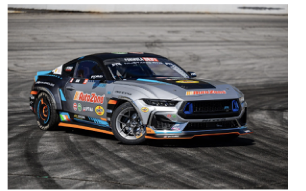
Culture, however, has not evolved alone, as drift cars themselves have seen a considerable transformation, from the 1970s compact, rear-wheel-drive street racers, to modern 1,000+ horsepower, supercharged beasts produced solely for drifting.
As Formula Drift becomes prevalent in the modern era, how does it influence Loyola students? Drake Sosnowski, 27, an amateur race car driver and motorsports enthusiast, shares his thoughts on Formula Drift for both racers and viewers.
“For young aspiring racers, entry-level drifting, which eventually leads into Formula Drift, is much more accessible than most forms of motorsports.” He also adds, “You don’t need to start with a super expensive build or anything like that.”
And for viewers, he shares: “Dude, it’s so sick…It’s super entertaining. It’s usually like a whole weekend thing, kind of how Formula One is. And it’s a lot cheaper, from what I’ve heard.”
As Formula Drift has seen an unprecedented 650% growth in its social media presence since 2013, it is deemed one of the fastest-growing motorsports in the world, with about 80% of the audience being a part of Gen Z.
Tommy Kendall, a former professional race car driver who competed in the International Motor Sports Association and the Trans Am series in the 1990s, shares his opinions on drifting being a sport for the youth.
“I don’t want to be the old guy standing on his porch yelling, the good old days were better, you know? The new days are cool too, these cars, the drift cars, I think are now 12, 13, 1400 horsepower. You know, you’ve got to be asleep to not appreciate that”.
Drifting has transformed from a niche subculture among rebellious youth in Japan to a multimillion-dollar championship series that is far more accessible to Loyola students than most other Formula races, in both viewership and participation.
In Formula Drift, races are held between two cars, a leading car and a trailing car that cannot separate from the leader. The leader here is Formula Drift, and the trailing car is…You.