




Throughout my time at Loyola, I’ve completed my fair share of required reading assignments and have heard countless complaints about the assigned books. Alongside these complaints, I’ve heard how few people actually read the books solely because it is mandated.
While I understand that literature as a whole is entirely subjective and that not everyone will enjoy reading a particular book as much as the next, that doesn’t justify completely shrugging off certain literary works simply because they’re mandatory. When assigned as homework, reading is automatically turned into a chore, making it undesirable for most. Generally, anything involving a set deadline or obligation with consequences is unpleasant, making assigned reading often unenjoyable. Whether it’s reading short or long books with vocabulary so unfamiliar that it needs to be looked up online, almost no one likes the frustration and workload that comes with assigned reading, myself included. Despite this, I’ve learned to enjoy assigned reading, and I believe that everyone should as well.
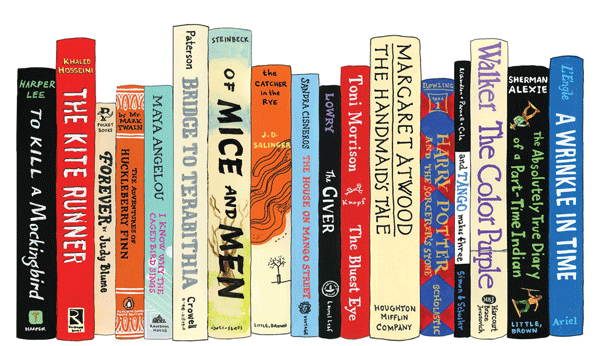
“The Catcher in the Rye” by J.D. Salinger was one of the most difficult and sluggish reads I’ve ever experienced. I felt almost no connection with the cast whatsoever, so every time I’d open the book, the words felt hollow and easily forgettable. Despite this initial disconnect, I now find myself grateful for this tedious read, having taken away many valuable comprehension and analysis skills.
In and outside of class discussions, I was eager to share my strong opinion of “The Catcher in the Rye,” but not from a place of love. Instead, I was more than happy to explain my distaste for the book, which, unknowingly, helped me appreciate and understand the parts that were compelling to others yet dull and forgettable to me. By conversing with my classmates who liked “The Catcher in the Rye,” I found myself connecting with new people and becoming intrigued and appreciative of the book, in spite of my utter disdain for it.
As it’s not a far-fetched statement to say that our students do not read as much as they should, mandated reading helps maintain proper academic standards and keeps students’ literary growth in check. After the lethargic read, which was “The Catcher in the Rye,” I could immediately tell its impact on my overall reading comprehension. Challenging vocabulary and texts that I would have had to read over numerous times to understand became more coherent and straightforward.
As contradictory as it sounds, one of the best parts of obligatory reading is enjoying books you wouldn’t have thought of reading, much less actually picking up and giving them the time of day. Cormac McCarthy’s “The Road” was my most recent school-assigned book, and although I usually wouldn’t consider reading a book whose plot didn’t particularly captivate me, I absolutely enjoyed it. Gray went on to say, “But pushing through the parts that I hated has definitely made me a stronger reader and appreciate books that I would’ve never enjoyed in the first place.”
If you truly cannot get yourself to like a book, my recommendation for ultimately benefiting somewhat from reading it is to focus your frustration and aversion into your annotations, class discussions and writing assignments.
As annoying and frustrating as mandatory reading is, it’s not the end-all, be-all of school assignments, and truly spending time to complete your daily reading instead of resorting to CliffNotes can go a long way academically. Ditch the summaries and crack open the book; the growth that comes from the struggle is worth much more than whatever easy grade summarization websites can obtain.