


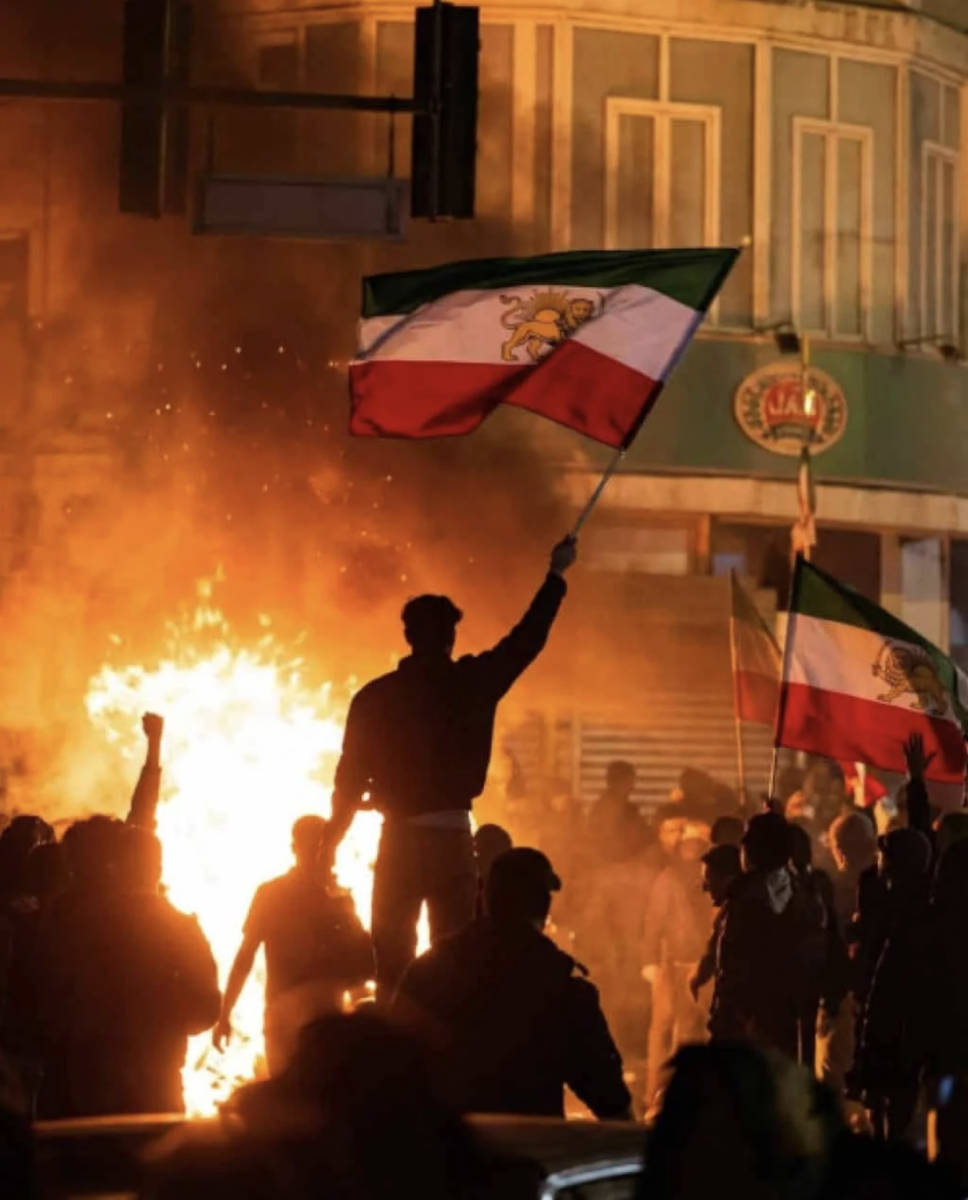


On March 4th, the Islamic Revolutionary Guard Corps announced the closure of the Strait of Hormuz. They stated they would target Western countries, including the US’s largest allies such as Britain, France, much of the EU and the US itself. The closing of the Strait of Hormuz is not without precedent. For decades, global powers have understood that narrow chokepoints can be used to exert influence on the world economy.
History teacher, Dr. Charley Binkow, talks about the 1973 Oil Crisis, stating, “Because the Arab countries lost the Yom Kippur War in Israel, you have what is known as the Organization of Petroleum Exporting Countries. They are a group of oil-exporting nations that basically set global oil prices, and they stifle oil production. This causes a crisis in the U.S., and they are basically using oil as a pressure point.” Similar to the oil embargo, the current disruption underscores how a strategic corridor can become a lever for economic pressure, which could amplify global consequences of a regional conflict.
Immediately, this brought massive profits to major oil companies, which saw their stocks rise 30% in corporations. At the consumer level, the Strait has brought severe global economic stress. Asia, particularly, is yet to see the worst consequences. Although countries like China hold vast oil reserves, they are now being forced to implement forms of fuel rationing and price shocks. India, on the other hand, is not as fortunate as China. It imports 90% of its oil and only holds reserves for 30 days.
Furthermore, the Strait has had a direct impact on American citizens, primarily through impacted gas prices. Since January, gas prices have risen nearly 50%, pushing many low-income Americans to the brink of poverty. These price shocks have been seen with our closest allies in Northern and Western Europe, with countries like Norway seeing gas as high as $10 a gallon.
The humanitarian toll has proven to be one of the worst lasting impacts of the closure. The International Rescue Committee reports a delay in its delivery of vital humanitarian supplies to underdeveloped countries. Many impoverished and war-torn countries in Africa already rely on imported fertilizer and energy resources previously processed by this strait. The World Food Program finds that the 45 million people who are currently just staying afloat will be pushed to food insecurity, not knowing where their next meal will come from.
Beyond the humanitarian strain, rising tensions in the region have also increased the risk of direct conflict. In early March, Iranian forces reportedly attacked several oil tankers attempting to navigate near the Strait, resulting in around ten casualties among global shipping companies, many of which have either halted routes through the region or demanded significantly higher insurance premiums, adding another layer of cost to already strained supply chains.
Meanwhile, debate continues over the true impact of U.S. involvement in the conflict. While some political leaders have described the U.S. naval presence as a necessary countermeasure to Iranian aggression, military officials maintain that current U.S. actions are limited in scope. According to defense sources, the US blockade primarily targets vessels bound for Iran and has not significantly disrupted neutral or allied shipping. However, even a limited military presence escalates tensions and contributes to uncertainty in an already volatile region.
For Iran, the closure of the Strait represents a strategic maneuver and a significant risk. It shows they can disrupt a massive part of the world’s oil supply, but it also hurts them. Shortages of fuel and other important goods are starting to show inside the country.
Looking forward, it’s unclear what will happen next. The U.S. has suggested more talks, but similar attempts over the past decade have shown little progress. Binkow continued, “The signal for the end of this conflict will be some sort of peace deal or the fall of the Iranian government.”
As of April 22nd, Iranian officials have reaffirmed their commitment to maintaining pressure in the region, firing on 3 ships in the strait and seizing two. With fuel prices still rising and supply chains under strain, the global community faces a rocky road, where economic stability and geopolitical tensions remain closely linked and fragile.
The key question now is whether the current conditions will persist or deteriorate further. If the blockade effectively limits Iran’s access to resources, it may push the leadership toward negotiation. However, if enforcement proves inconsistent, Iran may continue its closure of the Strait, prolonging disruptions to global trade, energy supplies and agriculture.