



TEHRAN, Iran — In 1979, Iran’s shah was deposed and exiled to Egypt, his family fled to the U.S., and a monarchy that had endured in various forms for 2,500 years collapsed. The subsequent Islamic regime has held power for over 40 years, recently facing nationwide protests that resulted in an estimated 30,000 deaths.
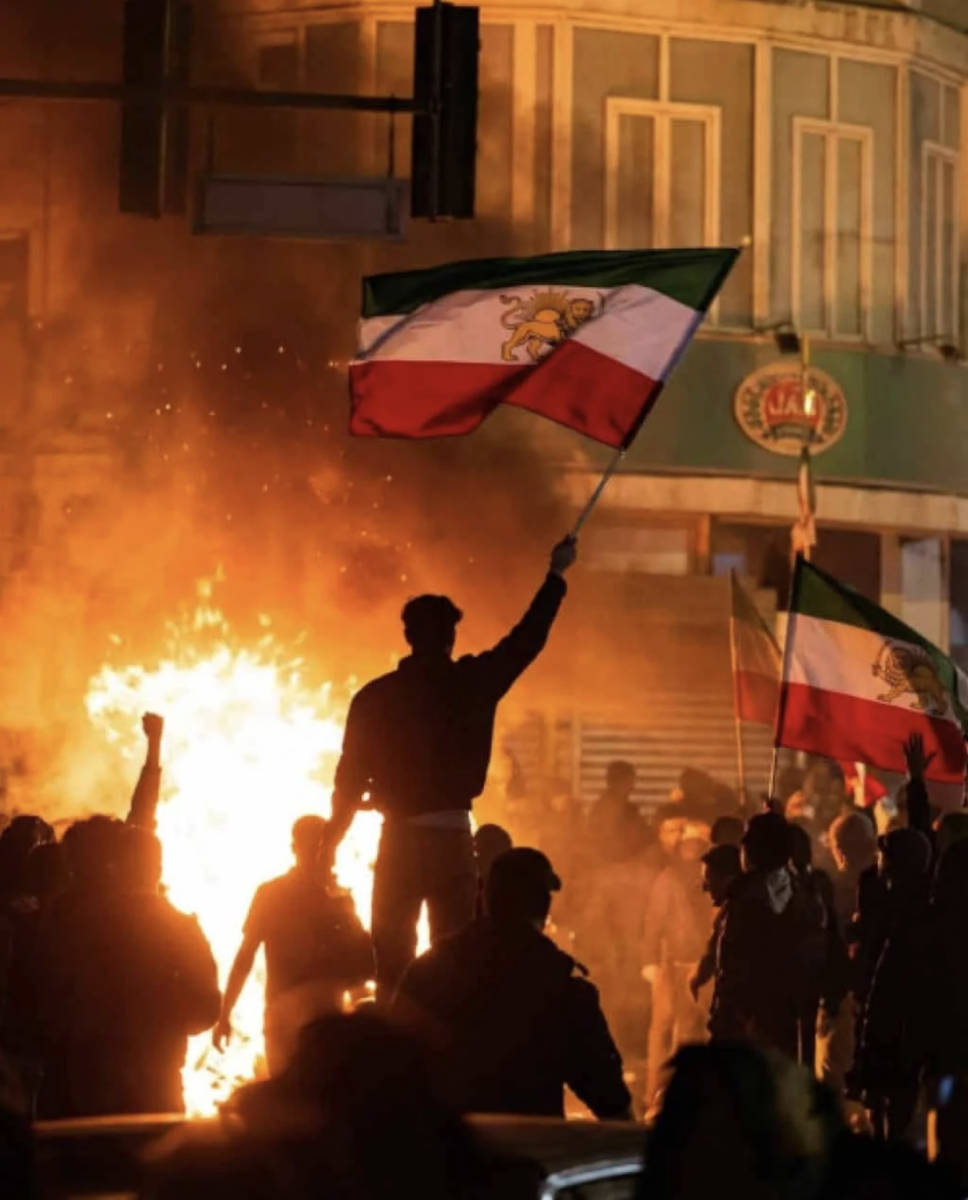
These protests were sparked by a massive drop in employment, as families began to starve and the economy’s inflation just went up, the took a stand. Starting in early 2025, the streets of Tehran erupted into flames and protest. Police commanders ordered troops against millions and killed tens of thousands. The streets which once showed growth, were silenced with oppression.
In response to the unrest, the U.S. moved a carrier strike group into the Persian Gulf, a move long predicted by analysts. These vessels eventually launched missile strikes against Iranian military installations, supported by Israeli drone and missile units. The Trump administration and the Israeli government stated the primary targets included 2,000 missiles intended to disable Iranian nuclear facilities, air defense systems, government leadership, and military encampments.
U.S. and Israeli forces successfully damaged or destroyed several targets, including much of Iran’s air defense network. The strikes killed Iran’s supreme leader, Ali Khamenei, along with several high-ranking military and police officials.
Ali Khamenei’s death marked the end of an era of Iranian governance marked by
His passing instigated an internal scramble for power within the Islamic Revolutionary Guard Corps (IRGC) to fill the power vacuum. While the Assembly of Experts moved quickly to formalize the transition, reports from Tehran suggest that the appointment of Mojtaba Khamenei has triggered deep factional infighting between his loyalist hardliners and the military elite. This internal struggle for the new Supreme Leader’s favor has hindered the regime’s ability to coordinate a coherent defense against the United States and Israel. As the central authority in Tehran scrambles to solidify Mojtaba’s control over the Revolutionary Guard, several provincial capitals have been left essentially self-governed, further fracturing the country’s wartime leadership.
The significant damage to the regime’s infrastructure has come with a high humanitarian cost. Aid groups in Iran reported upwards of 1,000 deaths following the strikes, largely due to the proximity of military zones to densely populated areas.
The most prominent incident occurred at a girls’ school, where nearly 170 students and teachers were killed. While the strike successfully destroyed a nearby military medical installation, a stray Tomahawk missile hit the school. The Pentagon has since accepted responsibility for the malfunction.
Rachel Berwald, a political science professor, noted “The appointment of Khamenei’s son is unlikely to redirect Iranian hostilities toward the U.S. and its allies,” with Iran’s subsequent actions reinforcing this view.
Iran responded with retaliatory strikes against U.S. allies, including Qatar and the United Arab Emirates, and launched missiles at Tel Aviv, Israel’s second-largest city.
While U.S.-Israeli strikes have since decreased by 80% to 90%, the CIA is reportedly backing Kurdish militant groups to pressure Iran on two fronts. Prime Minister Benjamin Netanyahu and U.S. officials stated they remain committed to the effort and do not intend to cease operations in the near future.
The decision to back Kurdish militants represents a significant shift in U.S. foreign policy. By providing intelligence and equipment to these groups in the northwest, the CIA has forced the IRGC to divert its remaining air defense away from the capital and successfully grounded Iran’s F-14 fleet. Despite this strategy being effective, it has drawn sharp criticism from Turkey, which views collaboration with Kurdish groups as a direct threat to its own border security.
Benito Arias ‘28 believes the strikes “can save lives,” though from a Jesuit perspective, he argued the U.S. should prioritize civilian safety over tactical destruction.
Alternatively, many students have been quick to point out that the political and diplomatic consequences may outweigh temporary strategic gains.
Tomas Gonzalez ‘26 argues “Even if the regime falls, the vacuum the United States and Israel are creating will take decades to stabilize, likely leading to another era of extremism. Additionally, if Trump decides to withdraw the military without plans for long-term regime change, Iran will quickly recover from any losses.”
Loyola students echo widespread doubt concerning the conflict. The ongoing military intervention in Iran has quickly taken center stage in political dialogue, with many Americans. Ultimately, there is still room for improvement on both sides, as officials have indicated that this is the beginning of a very long, very costly war.