

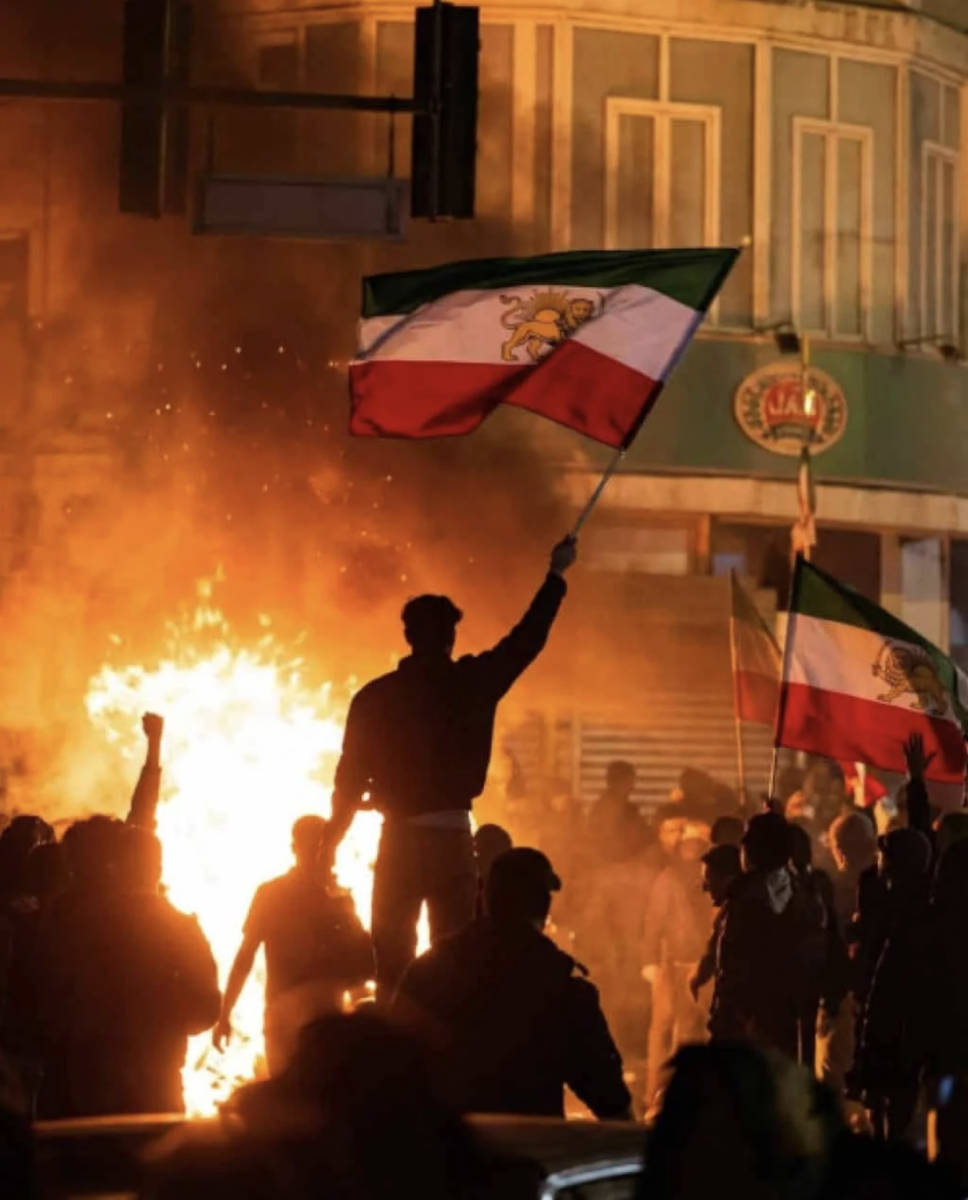


Since the end of World War II, society has trended toward globalization. Mass migration, multiculturalism and diversity have been celebrated as unquestionably good. Despite this (and some argue as a reaction to it), since the mid-2010’s, there has been a conservative push in elections around the world.
Leaders like Donald Trump, Giorgia Meloni and Sanae Takaichi have all been elected into office over the past decade, each running on conservative themes and platforms. In England, the Reform UK party and in France the National Rally Party, two right-wing parties, have become the leading parties in their respective nations. Reform pushed 2016’s so-called Brexit referendum, which saw Britain turn away from homogenization with Europe to stand alone as an economy and culture. So what is causing this change in politics, what effects is the sudden shift having and what even is conservatism?
Adrian Macias ‘26 said, “Conservatism is caution in terms of how your society develops.”
He gave an example of Edmund Burke who warned the French before that if they change their society too quickly then it would cause chaos. Burke’s warning came to fruition shortly after the French Revolution. Napoleon Bonaparte took over France and then terrorized the rest of Europe for a decade.
Macias ‘26 thinks that young men becoming more conservative has played a big role in this conservative push. “Young men have gotten more conservative over the past ten years.”
This is true, according to the Survey Center on American Life, since 2015 the amount of men aged 18-29 that are conservative has gone up, while those who say they are liberal or moderate has gone down. This is likely caused by the type of content they see online. Different content creators that push men into more conservative ways of thinking.
Joseph Schimoller ‘26 said, “Social media and the pandemic pushed men towards groups where they felt the values of previous generations, while the values of the current generation often are critical of men for the problems which were more heavily president years ago but don’t exist today.”
Macias ‘26 said, “Globolization is the more connected world where things like migration are more accepted, and makes things cheaper but there are consequences.”
For example, in another country someone could pay a desperate person in a third world country an extremely low wage, this would make the product cheaper in the U.S. for many consumers, but both the person who is now jobless in the U.S. and the person who is being exploited for their labor feel like they are being short-changed.
The other part of conservatism largely relates to immigration. Countries like the U.S., the U.K., Italy, Germany, France and Japan are becoming more conservative in their border policies because of their concerns about immigration. The people of these countries are often concerned about losing their culture or other jobs going to immigrants.
Conservatism has both strengths and weaknesses but it is clear that the people around the world seem to be choosing a more conservative way of government. It is important to note that conservatism around the world does not look the same.
As Macias ‘26 said, “A conservative in Italy and Iowa are very different. A conservative in Iowa is likely Protestant while a conservative in Italy is probably very Catholic.”
These differences are true all around the world. For example in the U.S. communists are considered very liberal, but in China a communist like Xi Jinping is considered conservative. Every culture is different and around the world people have started to agree that it is important to preserve their own culture instead of moving towards a new global culture.